SANA EnergyENERGY TECHNOLOGY

Portable power stations

Portable LiFePO4 power supplies with a pure sine wave output, from 320Wh to 5222Wh — for home backup, travel and sensitive equipment.

Choosing a power station

What a power station actually is

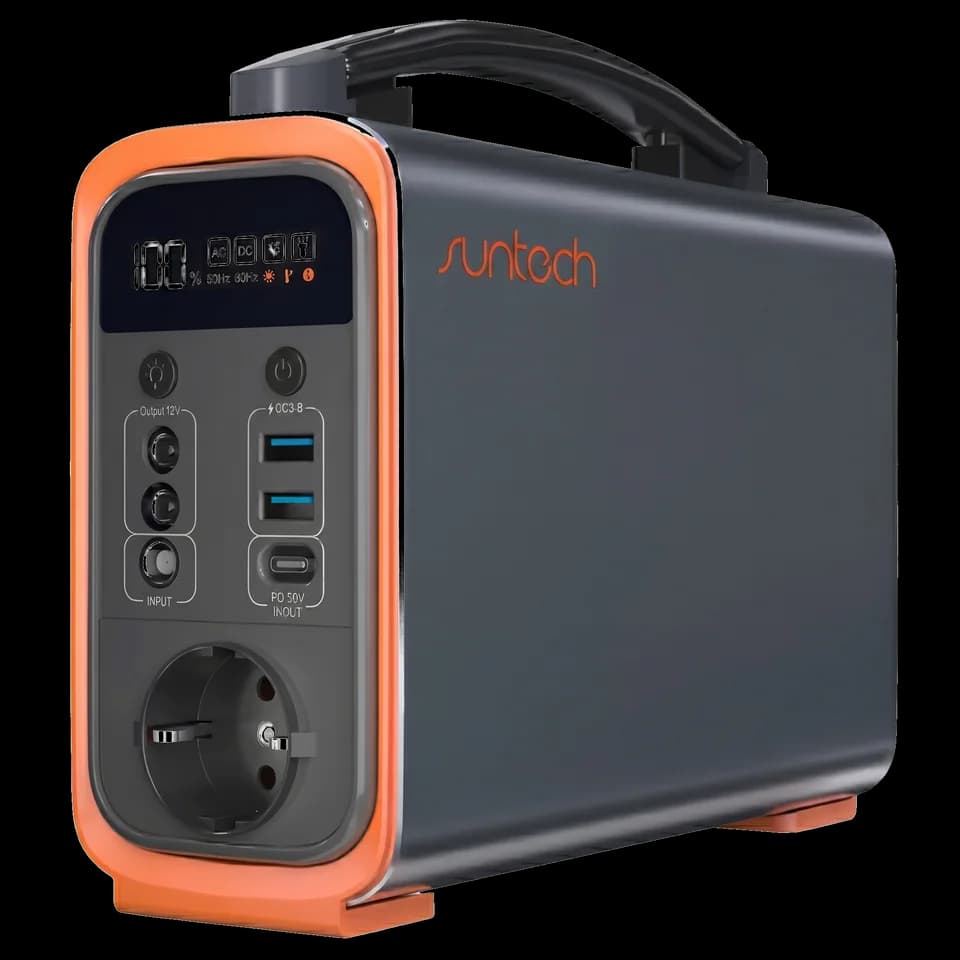
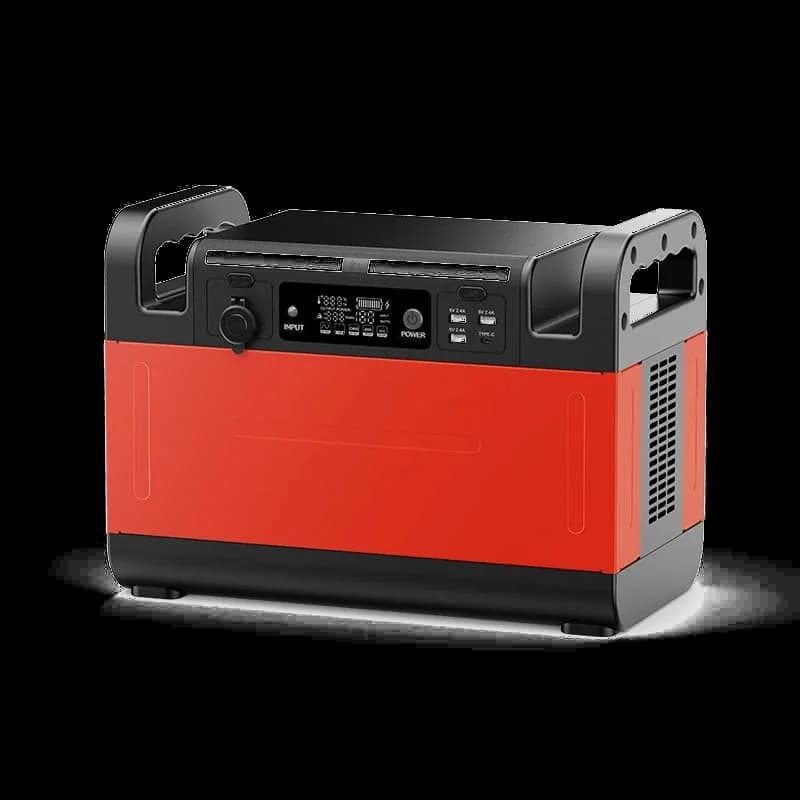
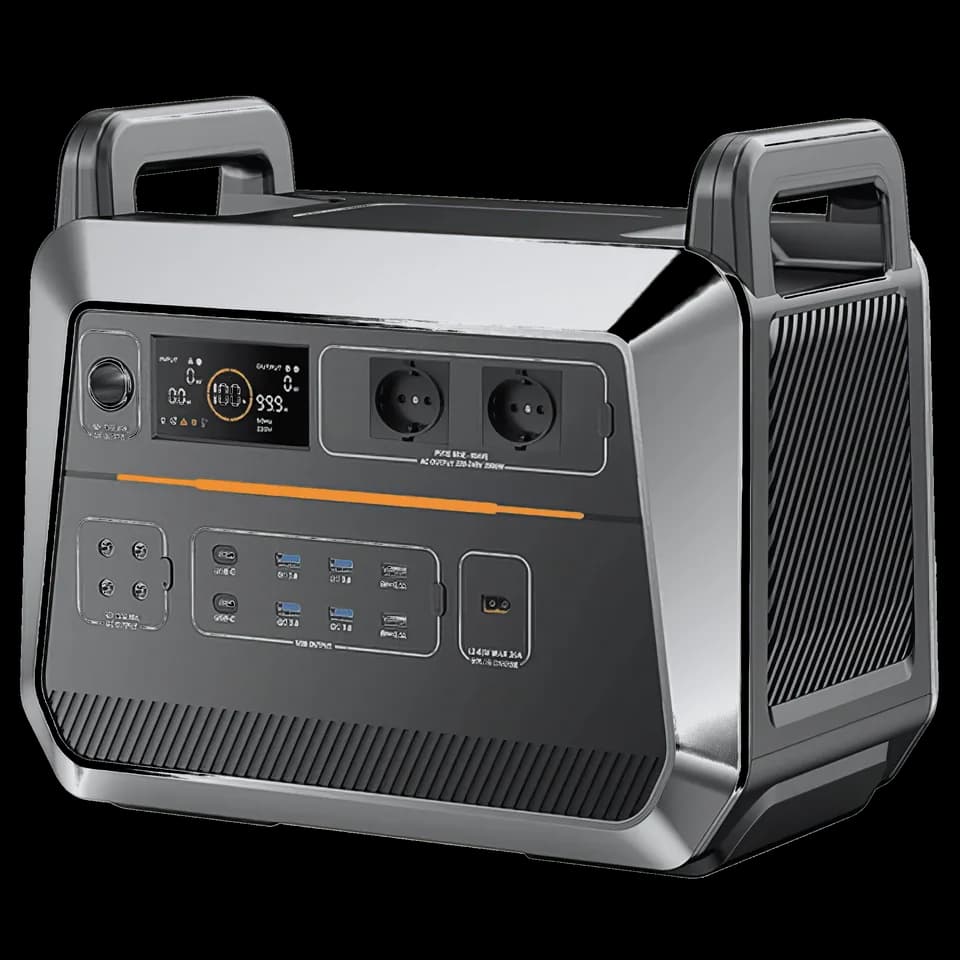
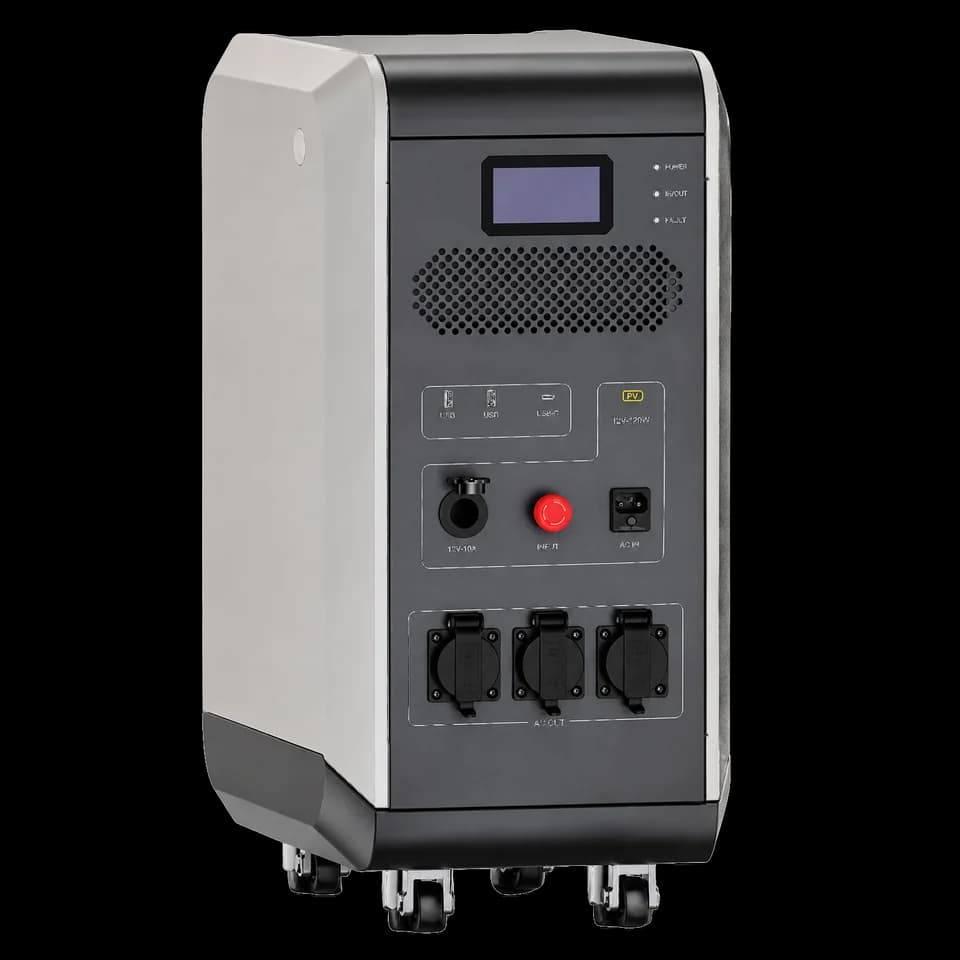
A power station is a portable, self-contained source of mains power: battery, inverter, charger and outlets in one body. It charges from a wall socket, a solar panel or a car's 12 V outlet, and during an outage you plug equipment straight into it.

Its main difference from a fixed system is that it does not pick loads up automatically — there is no wiring and no separate board, so you move the plug. In exchange it needs no installation at all, and it travels.

Watts versus watt-hours — the two numbers people confuse

Watt-hours (Wh) are capacity: how much energy is stored. Watts (W) are output power: what it can run at once. The two are independent, and both have to match your need.

A unit with high capacity but low output will keep a laptop going for hours and not start an electric kettle at all. There is a third figure people see less often — surge power — which decides whether it can absorb a fridge motor's starting current or simply cuts out at that moment.

What it runs, and for how long

A rough estimate: divide the watt-hour capacity by the appliance's draw in watts for an approximate number of hours. A modem and LED lighting draw very little and run for hours even on small units.

A fridge is a different calculation: its average draw is low, but the motor cycles on and off and pulls a large current each time it starts. For a fridge, both the capacity and the surge rating have to be adequate. Heating appliances — kettles, hairdryers, electric heaters — are the heaviest and empty the capacity quickly.

Power station or fixed system?

If what you want is for household loads to stay on through an outage without your involvement and without a perceptible break — fridge, boiler, lighting — a fixed system with a hybrid inverter and its own board is the right answer.

If your need is a few specific devices, or the power has to travel with you, or you would rather not get into installation and wiring at all, a power station is simpler and faster. Plenty of people start with one and add a fixed system later.

Frequently asked questions

How does a power station differ from a UPS?

A UPS is built to bridge short outages so sensitive equipment can shut down properly; its capacity is typically minutes, and it stays connected to the mains. A power station holds far more energy, travels, and can charge from a solar panel — but unlike a UPS it is generally not designed for automatic, break-free transfer.

Will a power station run a fridge?

The larger models will, provided both the watt-hour capacity and the surge rating are sufficient. A fridge motor draws several times its normal current when starting, and a unit adequate only on continuous power may cut out at that moment. Match the surge figure against your own fridge's specification before buying.

How long does a full charge take?

It depends on the unit's capacity and the charging method. Mains charging is the fastest; solar depends on panel power and how strong the sunlight is; the car's 12 V outlet is the slowest. The exact figure for each model is in that product's specification.

Can it be charged from a solar panel?

Yes — the models we carry have a solar input and can be charged from a portable panel, which is what makes them useful when camping and in long outages, since you no longer depend on a socket. The panel's voltage and power have to fall within that model's permitted input range.

CallWhatsAppConsult